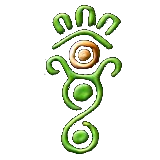
Olmec Symbols
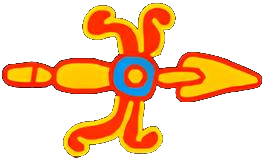
Among the Olmecs, the first sign adapts precisely to the form of the smaller base and the sides of the trapezium. In the ulterior cultural groups it preserves its esential structure but appears modified by curved or graded shapes at the tips of the lateral elements; at times, these tips turn into ophidian heads, so that the entire sign comes to be a double headed serpent.

The second sign is constructed with two equivalent elements that are generally serpentine parts: heads, bodies, rattles, bifid tongues.

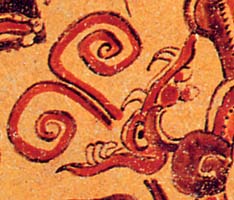
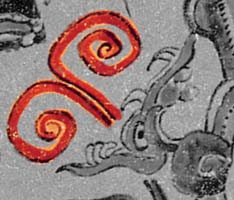
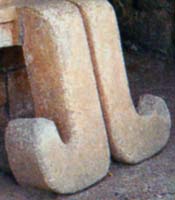
Number three presents multiplied manners of figuration, rooted in two that are fundamental: either its three elements are identical, or the central differs from the two lateral elements.
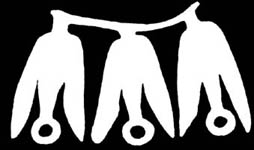
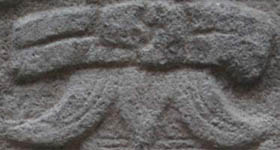
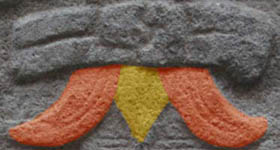
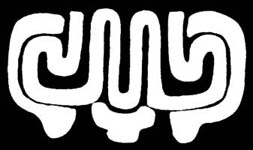
The main forms of representation of the quinqunx are the five points in its pure form; two bands that cross in its central part; a square with a central circle, and a quadrant of circle in each of its angles, or the different glyphs of movement.
Those four signs have origin in the Olmec plastic, and from there they spread to the totality of modes of the ancient Mexican culture.